Airbnb in San Diego: What the New Short-Term Rental Regulations Mean for Homeowners
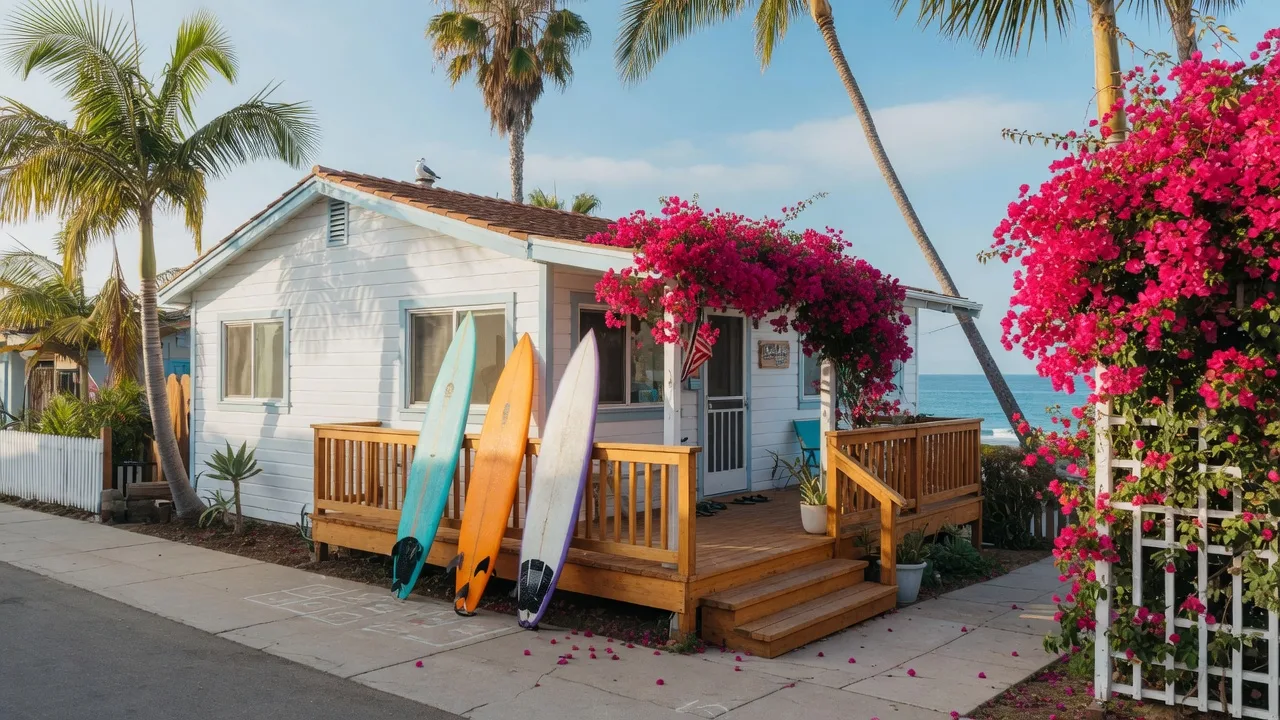
San Diego is one of America's most popular vacation destinations, which makes short-term rentals like Airbnb an appealing idea for homeowners. But the rules have changed a lot in recent years, and they keep getting more serious. From licensing tiers to tax zones to new state enforcement, the landscape for short-term rentals in San Diego is more regulated than ever. Whether you already host, or you're just wondering if your home or ADU could work, here's what you need to know.
Yes, short-term rentals are legal in San Diego, with a license
Let's start with the good news: San Diego did not ban vacation rentals. Unlike some cities that took the all-out prohibition route, San Diego built a licensing system around them, which means hosting is still possible, but it comes with real requirements. The central one is the Short-Term Residential Occupancy license, commonly called an STRO.
If you rent out any property for under a month, you need an STRO license. That includes the one-week summer rental in Mission Beach, the month of Comic-Con guests in a North Park bungalow, and the steady stream of weekend visitors in a La Jolla condo. Operating without one has been unlawful since May 2023, and the city has been enforcing it. So step one is simple: know whether your situation requires a license, because it almost certainly does.
The four license tiers
San Diego sorts hosts into four tiers, and which one you fall into depends on whether you live there and how often you rent. The distinction matters, because the tiers are not equal. Here is how they break down:
- Tier 1 covers part-time hosting, up to 20 rented days a year, with no requirement to be on site. It is the lightest-touch option, designed for occasional hosts.
- Tier 2 is home sharing, where you rent out part or all of the home you actually live in. Your primary residence is the anchor, and guests are sharing it with you.
- Tier 3 is the big one for investors: whole-home rentals outside Mission Beach, allowed for more than 20 days a year. These licenses are capped at 1% of the city's housing stock, and because demand far exceeds supply, they are often issued by lottery.
- Tier 4 covers Mission Beach specifically, and that cap has been reached. The window for new applicants is closed, so a new whole-home vacation rental in Mission Beach is effectively off the table right now.
The takeaway for anyone buying with plans to run a whole-home Airbnb: the license cap is a real constraint, not a formality. In much of San Diego, getting a Tier 3 license can mean entering a lottery with no guarantee of a spot. If the short-term rental income is part of your investment math, research the cap and the waitlist before you commit to the property, not after.
ADUs: great for housing, not for Airbnb
If you have an accessory dwelling unit, the short-term rental door is mostly closed. ADUs built after 2017 cannot be used as short-term rentals, a rule the city put in place to keep ADUs on the market as long-term housing, which they view as a key part of San Diego's housing solution.
Older, pre-2017 ADUs may have different options, and anyone in that situation should verify what applies to their specific unit. But the general rule matters a lot, especially if you are planning new construction: that backyard unit is long-term rental housing in the city's eyes, not a hotel room. For homeowners who built an ADU hoping for vacation-rental income, that expectation needs to adjust. The good news is that a well-built ADU is still a strong long-term rental asset, it just has to play by the long-term rules.
The taxes add up
Hosting also means taxes. San Diego charges a transient occupancy tax, or TOT, on short-term stays, and you need a TOT certificate from the city, issued separately from your STRO license. It is an extra step people often miss until the notice arrives.
After voters approved Measure C in 2025, San Diego's TOT now varies by zone, at 11.75%, 12.75%, or 13.75% depending on where the property sits. That is a meaningful slice of every booking, and it changes how you should price the nightly rate. You also need a rental unit business tax registration, and those obligations sit on top of the license fees themselves.
The good news: most booking platforms collect and remit the tax for hosts, which takes some of the admin off your plate. But you are still responsible for knowing your obligations and making sure they are met. A platform error or a personal misunderstanding of your tax zone is still your problem at the end of the day.
California is cracking down, and platforms are now in it too
The enforcement picture sharpened on January 1, 2026, when California Senate Bill 346 took effect. Under the law, booking platforms like Airbnb and Vrbo are required to share host and listing data with cities and to remit transient occupancy tax, with penalties up to $10,000 a day for noncompliance.
Translation: the days of a quiet, under-the-radar Airbnb are over. If you host in San Diego, the city and the state now have far more visibility into what is rented, where, and by whom. There is no longer much room to slip between the cracks, and the penalties for trying are steep.
I have said it to sellers, buyers, and investors for years, and it applies double here: playing by the rules is not just the right call, it is increasingly the only workable call. A $10,000-a-day penalty can erase a summer of hosting in a week.
What this means for homeowners
If you are a homeowner considering short-term rentals, the message is: research first, host second. Here is the checklist I would run through before listing anything:
- Check the license tier that applies to you, and whether caps or waitlists are involved. Tier 1 and Tier 2 are much easier to get into than Tier 3 or Tier 4.
- Confirm your property's TOT zone and what the tax will actually be, at 11.75%, 12.75%, or 13.75%, before you set a nightly rate.
- Understand that ADUs are effectively off the short-term table, at least for anything built after 2017. Plan for long-term rental income instead.
- Budget for the paperwork, the fees, and the compliance obligations, because they are not optional anymore. License costs, the TOT certificate, and the business tax registration all add up before you welcome your first guest.
Done properly, short-term rentals can still be lucrative in a city that millions of people visit each year. San Diego is not going to stop being a vacation destination, and there is real money in hosting done right. Done sloppily, they can cost you in fines, back taxes, and headaches that turn a supposedly passive income stream into a second job.
Already running a short-term rental? The rules are tightening fast. See what established Airbnb hosts need to watch for in 2027
The bottom line
San Diego's short-term rental rules have matured quickly, and they are only going to keep evolving. Measure C changed the tax structure, SB 346 changed the enforcement landscape, and the license caps are a permanent feature of how the city manages vacation rentals. None of this means you should write off hosting, it means you should go in with the full picture.
Whether you are weighing Airbnb on your primary home or thinking about the long-term path for an investment property, it is worth getting that full picture before you decide. If you have questions about how these rules affect your home, your rental, or your plans, reach out anytime at (619) 630-9618 or through the contact page. I am happy to help you sort through what applies to your situation.

Hanna Bederson
Real Estate Agent, Investor & Funder · San Diego · DRE #02096870
Thinking about short-term rentals in San Diego?
The rules changed fast, and they keep changing. Call or text (619) 630-9618 or reach out below, and we can talk through how the STRO tiers, TOT zones, and new state enforcement apply to your home or investment property.
Contact Hanna