New California Housing Laws Taking Effect July 2026: What San Diego Buyers and Sellers Need to Know
Every year, California lawmakers pass legislation that quietly reshapes how we buy, sell, and invest in real estate. Most of these changes fly under the radar until they hit your transaction. This July, three significant policy shifts take effect that every San Diego buyer, seller, and investor should understand. Two of them could change the value of property near transit corridors. One will affect nearly every home sale in wildfire-adjacent areas. Here is what you need to know, and what to do about it.
SB 79: Higher Density Near Transit Stops
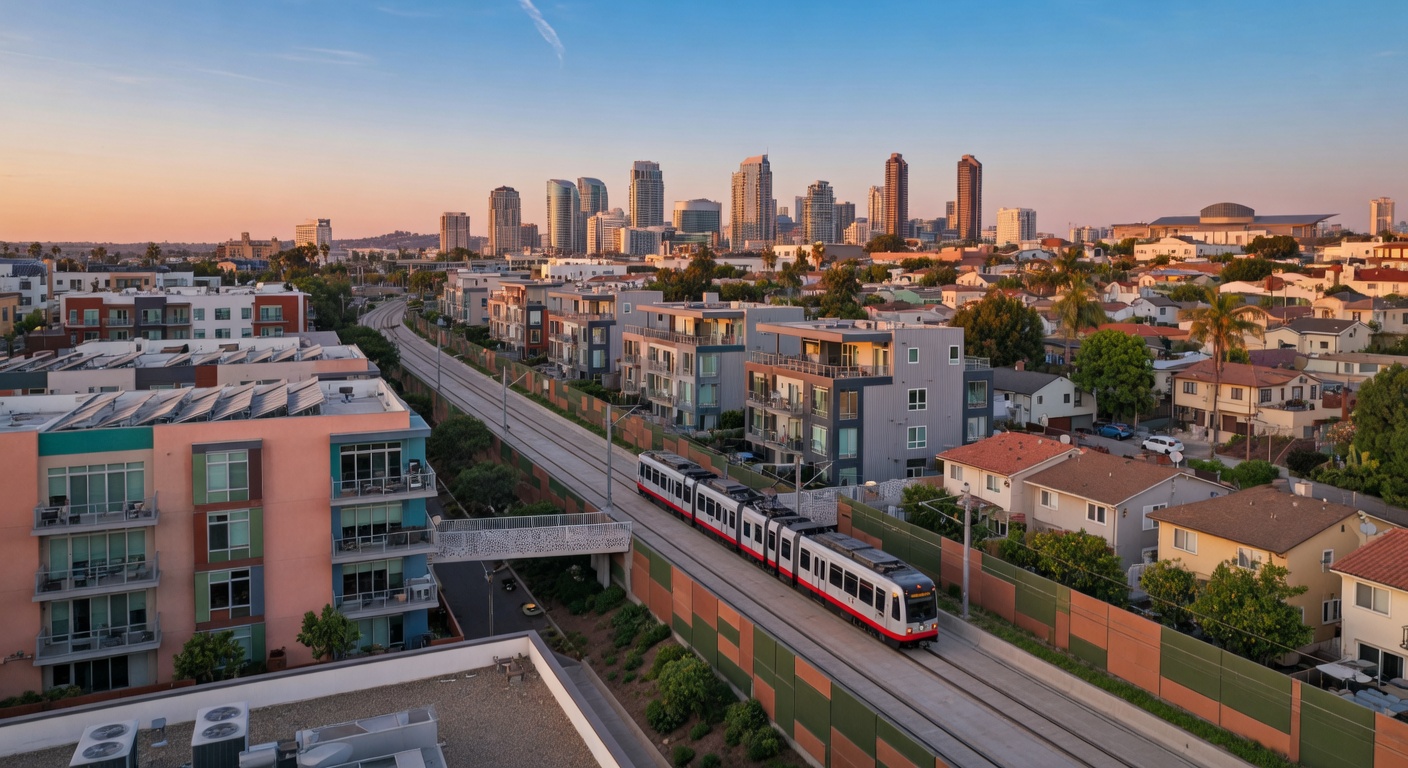
Senate Bill 79 is the headline change. Taking effect July 1, 2026, SB 79 overrides local zoning rules to allow significantly higher-density housing within a half-mile of qualifying transit stops, including San Diego Trolley stations. Depending on the proximity to rail service and the type of transit, developers can now build structures of up to eight stories in areas that were previously zoned for single-family homes or low-rise commercial.
For San Diego, the implications are concentrated along the trolley corridors: Mission Valley, the College Area near SDSU, parts of Downtown, City Heights, and certain stretches of the Blue and Orange lines. If you own property within those half-mile zones, the potential for redevelopment just increased. That does not mean a high-rise is going up next door tomorrow, but it does mean the floor on what a developer might pay for that land has moved higher.
From a buyer's perspective, this creates a mixed picture. On one hand, more density near transit means more housing supply long term, which could ease pricing pressure in those corridors. On the other hand, the construction process itself can be disruptive, and the character of established single-family neighborhoods may shift over the coming years.
As someone who has invested in San Diego real estate for over 10+ years, I see SB 79 as a long-term play. Properties near transit that were already appreciating will likely see renewed developer interest. For my investor clients, this is worth monitoring closely. If you are evaluating a buy-and-hold strategy near a trolley station, the upside picture just got more interesting. For more on how I evaluate investment opportunities, visit my investment properties page.
Measure A: San Diego's Vacant Home Tax Proposal
San Diego voters just weighed in on Measure A, a proposed tax on non-primary residential properties left vacant for more than 183 days per year. The measure was designed to incentivize owners of second homes or investment properties to either occupy or rent out their units, with the goal of increasing housing supply in a city where vacancy is a contributing factor to affordability challenges.
Early returns indicate the measure did not pass. That outcome matters for investors and second-home owners. For now, there is no additional tax penalty for holding a vacant property in San Diego. However, the conversation is not over. Similar proposals have gained traction in other California cities, and the political appetite for addressing housing vacancy is growing. If you own investment property or a second home in San Diego, now is the time to evaluate your hold strategy while the regulatory environment is still favorable.
Where are you headed next? If you are holding a property and wondering whether to rent, sell, or continue holding, let's run the numbers together. That is exactly the kind of strategic conversation I have with my investor clients every week.
Zone 0 Defensible Space: New Inspection Requirements for Home Sales
Beginning July 2026, real estate transactions in California will require compliance with "Zone 0" defensible space inspections for properties located in designated wildfire-prone areas. Zone 0 refers to the immediate five-foot perimeter around a structure, the area most vulnerable to ignition from embers, radiant heat, or direct flame contact.
What this means practically: if your home is in a wildfire-risk zone and you are selling, you may need to demonstrate that the area within five feet of your home is free of combustible materials such as wood mulch, dead vegetation, firewood stacks, or wooden fences attached to the structure. Non-compliant sellers could face delays or requirements to remediate before closing.
This requirement is not entirely new in spirit. California has had Zone 1 and Zone 2 defensible space requirements for years under PRC 4291. But Zone 0 is the critical first line of defense that was previously not mandated at the point of sale. For sellers in communities like Alpine, Jamul, Ramona, parts of Julian, and neighborhoods adjacent to open space in the backcountry, this is a conversation to have early in the listing process, not the week before escrow closes.
For buyers, this is actually good news. A pre-sale inspection means you will have more information about wildfire risk before you commit. I always recommend my buyers request a thorough property condition report that includes defensible space assessment, and this new requirement formalizes that process.
If you are wondering whether your property falls within a designated wildfire zone, or how to prepare your home for a compliant sale, my selling guide walks through the preparation process step by step.
What These Changes Mean Together
Stepping back, these three developments paint a clear picture of where California housing policy is headed: more density near transit, more scrutiny of vacant properties, and more accountability for wildfire preparedness at the point of sale. None of these laws are going to upend the market overnight. They are incremental shifts that will compound over time.
For San Diego specifically, SB 79 is the one to watch most closely. Our trolley system is expanding, and the areas around those stations represent some of the most strategically valuable real estate in the county. Understanding how zoning changes affect property values is something I help my clients navigate every day. With over 10+ years of experience and my own investment portfolio in San Diego, I do not just read about these changes. I live them.
Preparing for July and Beyond
If you are buying, selling, or investing in San Diego in the second half of 2026, here are three steps to take now:
1. If you are near a transit corridor, get clarity on how SB 79 might affect your property's zoning and long-term value. This is especially important for homeowners in Mission Valley, College Area, City Heights, and along the trolley lines.
2. If you are selling a home in a wildfire zone, start your Zone 0 compliance assessment now. Clear the five-foot perimeter, remove combustible materials, and document the work. Waiting until inspection week creates stress and potential delays.
3. If you are an investor holding vacant property, review your strategy. Measure A did not pass this time, but the political trend is clear. Building rental income into your hold strategy is not just good policy planning. It is good financial planning.
Whether you are a first-time buyer navigating VA loans as part of a military PCS move, a growing family ready to upsize, or an investor evaluating your next acquisition, these new laws are part of the landscape you are working in. Understanding them is the first step. Making smart decisions based on them is what I help my clients do every day.
What's important to you in your next move? If you want to talk through how these changes affect your specific situation, I would love to have that conversation. No pressure, no guesswork. Just clear guidance built around your goals.

Hanna Bederson
Real Estate Agent, Investor & Military Spouse · San Diego
What's important to you in your next move?
Let's Talk StrategyIn service, Hanna