Southwest Village Approved: What San Diego's Largest New Community Means for You
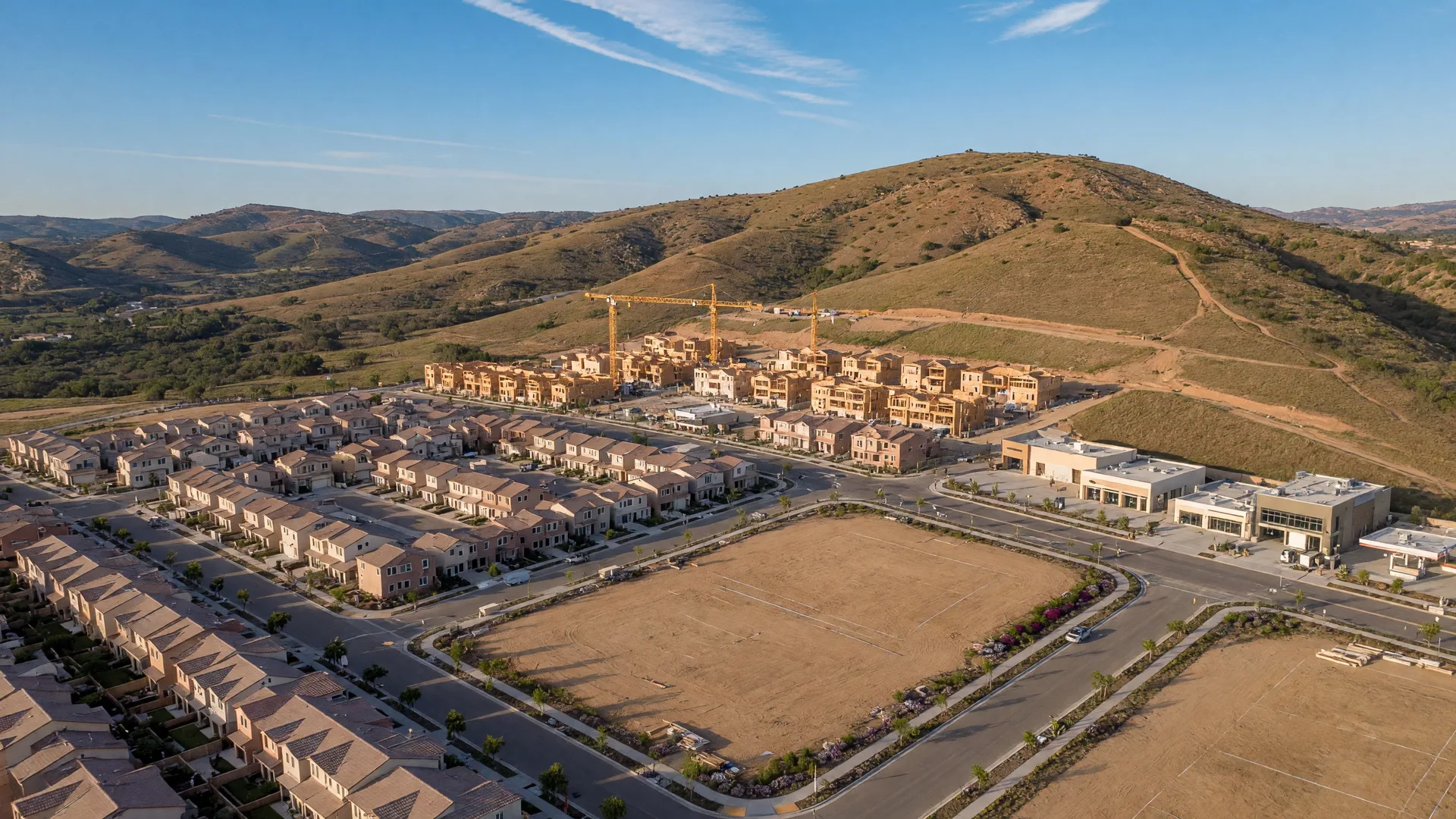
Something major just happened in San Diego real estate. On July 9, the San Diego City Council approved Southwest Village — a master-planned community of up to 5,130 homes on 490 acres in Otay Mesa, near the U.S.-Mexico border. It is the largest single residential development approval in San Diego in years, and whether you are buying, selling, investing, or just watching the market, it matters.
After 18+ years in this market — as an agent, an investor, and someone who has spent time on construction sites and in planning meetings — I want to break down what this project actually is, what it means for the housing pipeline, and how it affects your decisions right now.
What Is Southwest Village?
Southwest Village is a transit-oriented, mixed-use community planned for a 490-acre site in Otay Mesa, south of State Route 905 and east of Interstate 805. The project has been in the planning pipeline for over 12 years and was led by Tri Pointe Homes, an Irvine-based builder that plans to develop approximately 1,500 to 2,100 of the homes on the site.
Here is what the approved plan includes:
- Up to 5,130 homes — a mix of single-family residences, townhomes, condos, and multifamily apartments, with a meaningful affordable housing component
- 175,000 square feet of retail and commercial space — a mixed-use village core designed for daily shopping, dining, and services
- At least one new school — addressing the infrastructure needs a development of this scale requires
- 35 acres of parkland — including two neighborhood parks, pocket parks, plazas, and trail connections
- 200 acres of preserved open space — protected habitat and natural terrain that will remain undeveloped
- A future transit and mobility hub — designed to connect the community to the broader San Diego trolley and bus network
- A new fire station — though the City Council debated whether it should be built before or after the first 700 homes are occupied
The first phase includes 778 multifamily units and the core infrastructure — water, sewer, roads, and the foundational elements that everything else builds on. From a construction standpoint, that sequencing matters. The infrastructure has to be right before the homes go up, and the quality of that early-phase work will determine the long-term character of the neighborhood.
Why It Matters for San Diego's Housing Market
San Diego County's active inventory currently sits around 6,400 to 6,800 homes, which represents roughly 3.2 months of supply. That is the healthiest level since 2020, but it is still below what economists consider a balanced market of 5 to 6 months. New supply matters — and 5,130 homes is not a small contribution.
But here is the nuance: this project will not deliver homes overnight. Large-scale developments like this take years to build out. The first residents of Southwest Village are likely several years away. What it does signal, though, is that San Diego's commitment to increasing housing supply is real. Between Southwest Village, the Midway Rising project in the Midway District, the Riverwalk development in Mission Valley, and the ADU boom across the county, the pipeline is the fullest it has been in over a decade.
For sellers, the long-term supply picture matters for pricing strategy. Homes in the southern part of the county — Chula Vista, Otay Mesa, San Ysidro — will eventually compete with brand-new construction at potentially more competitive price points. If you are thinking about selling in these areas, understanding that timeline is part of making a smart decision.
For buyers, especially first-time buyers and families, Southwest Village represents something San Diego has desperately needed: more housing options at a range of price points, including affordable units. When the first phases start delivering, it could ease pressure on neighborhoods throughout the South Bay.
What This Means for Otay Mesa and the South Bay
Otay Mesa has long been one of San Diego's most underutilized areas from a residential standpoint. It is close to the border crossing, near major employment centers, and has access to infrastructure that has been expanding for years. Southwest Village transforms it from a commercial and industrial corridor into a genuine neighborhood.
For investors, this is worth watching closely. Areas that undergo this kind of transformation — from undeveloped land to planned community — tend to see meaningful appreciation in surrounding properties once the first phases are built and occupied. The schools, retail, parks, and transit connections create a gravity that pulls value into nearby neighborhoods. If you own property in Otay Mesa, Chula Vista, or San Ysidro, or if you have been considering an investment in the South Bay, the approval of Southwest Village is a data point that strengthens the long-term case.
From my experience as an investor myself, the key is not to chase the headline. The headline tells you a project was approved. The real question is: what is the timeline, what is the build quality going to be, and how does this affect the specific neighborhood where you are buying or selling? That analysis is different for every property, and it is exactly the kind of conversation I am here for.
A Builder's Perspective: What to Watch
Having spent time on construction sites and understanding the building side of real estate, I look at a project like Southwest Village and see a few things that matter beyond the press release:
- Infrastructure sequencing. The plan calls for building water, sewer, and road infrastructure in the early phases. That is the right call. Communities that shortcut infrastructure end up with problems that cost homeowners money and headaches down the road.
- The fire station debate. The City Council raised a legitimate concern: should the fire station be built before or after the first 700 homes? Public safety infrastructure needs to keep pace with population growth, not trail behind it.
- Open space preservation. Two hundred acres of preserved habitat is significant. It gives the community a natural backdrop and prevents the wall-to-wall development feel that makes some large projects feel sterile.
- Affordable housing integration. The plan includes affordable units integrated into the community rather than siloed into a separate area. That matters for neighborhood cohesion and long-term property values.
- Tri Pointe Homes as the lead builder. Tri Pointe is a publicly traded national builder with a solid reputation for quality construction. They are not cutting corners on a project of this visibility.
The approval was not unanimous — Councilmembers Marni von Wilpert and Joe LaCava voted against it, citing concerns from nearby private landowners about property value impacts and environmental effects. That opposition is worth noting because it reflects the real tension in San Diego's housing market: the need for more supply versus the impact on existing communities and property owners. Navigating that tension is something I help clients with every day.
How This Fits Into the Bigger Picture
Southwest Village does not exist in isolation. It sits alongside a wave of new development activity across San Diego County that is reshaping the housing landscape:
- Riverwalk San Diego in Mission Valley — over 700 new homes on 200 acres, with the first affordable housing component already under construction
- Bancroft Lofts in North Park — 218 new multifamily units in one of San Diego's most walkable neighborhoods
- Midway Rising in the Midway District — a nearly $4 billion project with over 4,200 housing units and a new arena, still in planning stages
- ADU activity county-wide — streamlined permitting has unlocked accessory dwelling unit potential on thousands of properties, with some eligible for up to eight ADUs
Together, these projects represent the most significant expansion of San Diego's housing supply in a generation. For buyers, it means more choices are coming. For sellers, it means understanding how new competition affects your pricing. For investors, it means the market is evolving — and the investors who understand the construction pipeline, the timeline, and the neighborhood dynamics are the ones who will make better decisions.
What You Should Do Right Now
If you are a buyer, growing supply is your friend. You have more options today than you have had in years, and new construction adds even more to the pipeline. The key is finding the right home at the right price in the right neighborhood for your life — and that requires a strategy, not just a Zillow search. Our Buying Guide walks through the process step by step.
If you are a seller, the message is preparation and pricing. Your home is now competing not just with other resale listings but with the promise of new construction. The homes that show well, are priced accurately, and are marketed strategically are the ones that win. Our Selling Guide covers the full approach.
If you are an investor, the development pipeline creates both opportunity and risk. New supply can suppress rent growth in some areas while boosting land values in others. The difference comes down to location, timing, and numbers that work today — not projections. Our Investing Pitfalls guide covers the most common mistakes I see, and our Investment Properties page has more on how I help investors evaluate opportunities.
Where are you headed next? Whether you are looking at a home near Southwest Village, considering your investment strategy in the South Bay, or simply trying to understand what all of this new development means for your neighborhood, I would love to help you think it through. With 18+ years in this market, a background in construction, and the perspective of someone who invests in San Diego myself, I bring a different lens to these conversations.
What's important to you? Let's have that conversation. No pressure, no assumptions — just honest insight and a strategy built around your goals.
In service, Hanna

Hanna Bederson
Real Estate Agent, Investor & Military Spouse · San Diego · DRE #02096870
Have questions about new development in your neighborhood?
Contact Hanna