
San Diego's ADU Boom Has a Cautionary Tale: What Homeowners and Investors Need to Know
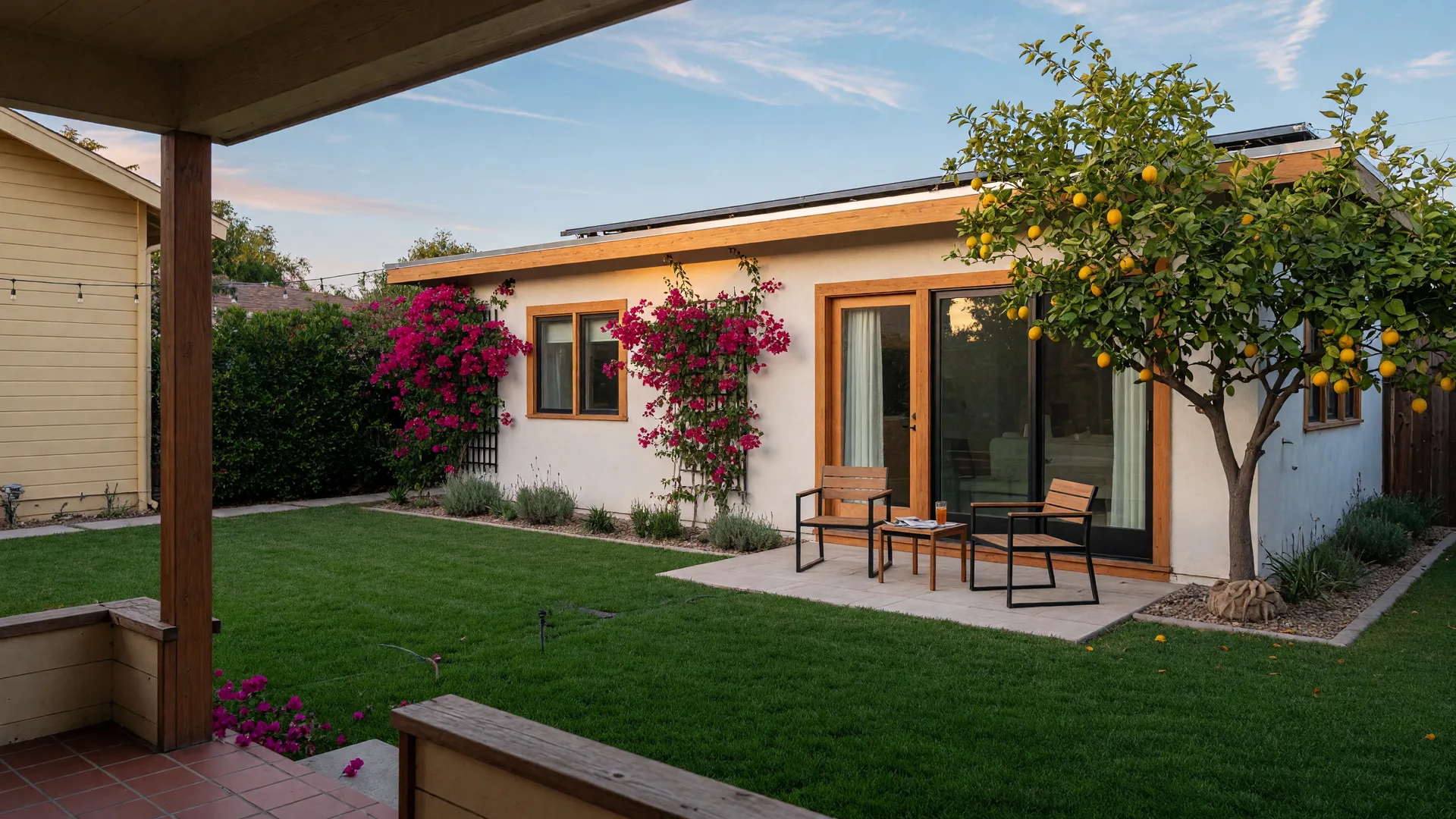
San Diego's accessory dwelling unit boom has a cautionary tale, and it broke into the open this week. The developer who became the face of the city's "bonus ADU" incentive program is now facing roughly 30 lawsuits from investors, lenders, contractors, and tenants, along with mortgage defaults, foreclosures, and vacant homes taken over by squatters in Encanto. For homeowners and investors who see ADUs as one of the fastest ways to build wealth in San Diego, the story is a reminder that the opportunity is real, but who you build with, how you finance it, and whose name is on the title matter more than ever.
After 18+ years in San Diego real estate, as an agent, investor, and military spouse, I have watched ADUs go from a niche policy to a genuine housing movement. I wrote about that opportunity back in July. This is the other side of the story, and it is worth reading before you sign anything.
What Happened: The "King of ADUs" and the Fallout
San Diego Union-Tribune reporting on October 4 detailed the mounting consequences for developer Christian Spicer, who earned the nickname "King of ADUs" by building a sprawling portfolio of at least 92 local properties, with some tallies running past 200, using the city's 2020 "bonus ADU" incentive. The City Council scaled that program back in June 2025 by capping ADUs per lot. The fallout since then has been severe.
The most heartbreaking case is Martin Eder, a 78-year-old retired San Diego teacher who invested roughly $812,000 of his life savings in a planned 143-unit "ADU farm" on vacant church land on Leghorn Avenue in Encanto. According to the reporting, dividends stopped after two payments, his name was never put on the property title, and he sued the developer in San Diego Superior Court in June 2026. By October, the number of lawsuits from lenders, construction firms, investors, and tenants had reached roughly 30, with a retired contractor's tally listing at least 36 court cases. At least 50 notices of default and four foreclosures have been filed for unpaid mortgages and property taxes, a 136-unit Pacific Beach project faced a foreclosure auction in May, and squatters took over vacant homes in Encanto, bringing chaos and crime to the neighborhood. Critics have described the scheme as essentially a Ponzi structure, with new investors reportedly recruited under a new company name.
What This Means for Homeowners
Here is the part I want every homeowner to hear clearly: this story is about a bad operator, not a bad asset class. ADUs remain one of the most powerful wealth-building tools San Diego homeowners have. The city issued 1,122 ADU permits in 2025, more than double the 538 issued in 2024, and the policy environment is still favorable. AB 1033 now lets you sell an ADU as a separate condominium, with its own deed and its own value; San Diego adopted it in August 2025 and the county followed in April 2026. My earlier article on the San Diego ADU boom walks through the opportunity in detail.
The lesson from Encanto is to keep control of your own project. Build with a licensed, insured contractor you can verify through the California CSLB. Make sure your name is on the title and the loan documents. Understand the deal structure before you commit a dollar, and never hand your life savings to a promoter who promises passive returns on a project you cannot inspect. A well-built ADU on your own property, financed transparently, is a different animal entirely from an unregistered investment in someone else's.
How to Finance an ADU the Right Way
If you are a homeowner exploring an ADU, there are legitimate financing paths that keep you in control. The San Diego Housing Commission's ADU Finance Program offers construction-to-permanent loans up to $250,000, with 1% interest during construction converting to a 4% fixed 15-year permanent loan, for owner-occupied single-family homes in the city. It requires a 680 minimum credit score and a 7-year affordability covenant, and it is designed for low-income homeowners at or below 80% of area median income. Home equity lines of credit, cash-out refinancing, and traditional construction loans are the other common routes for homeowners with equity.
What should raise a red flag? Fractional-ownership schemes that promise guaranteed returns, anyone who cannot show you a securities license for an investment product, and any deal where your name is not on the deed. If a promoter cannot explain, in writing, exactly where your money sits and who holds title, walk away. That is not cynicism; it is the hard-won lesson of this week's news.
What Investors Should Watch
For investors, the distinction that matters is between owning real estate and being a passive investor in someone else's project. Real estate ownership gives you title, control, and a tangible asset. Passive investment in a developer's program gives you a promise, and a promise is only as good as the person making it. Before you invest in any ADU program, verify the operator's track record, check for liens and notices of default on the properties involved, confirm the securities paperwork, and ask how earlier investors were paid and when.
My own background shapes how I see this. As an investor and owner myself, and with a commercial contracting background before real estate, I can price a renovation in hours rather than weeks, and I know which operators and builders in San Diego do honest work. That is the same lens I bring to every investment property analysis for my clients, and it is why I push back on deals that look too good to be true. The market rewards preparation, not impulse, and this story is the proof.
The City Is Maturing the Program
There is a constructive side to all of this. The June 2025 reforms that scaled back the bonus ADU program, plus the city's 2026 Land Development Code Update with its streamlined permitting, are the signs of a program maturing after a boom. Well-built ADUs still add real housing supply without new land, they still generate income for homeowners, and they still create entry points for buyers who cannot afford a median-priced home. The fix is not to abandon ADUs; it is to build them with your eyes open.
Where Are You Headed Next?
Here is my honest advice for October 2026. If you are a homeowner with a backyard, an ADU can still change your financial picture, but treat it like the construction project it is: verify your contractor, understand your financing, and keep your name on everything. If you are an investor, this week's news is a reminder that the best deals are the ones you can see, inspect, and control.
What is your biggest challenge? Where are you headed next? That is where every conversation I have starts, because the right strategy for you depends on your situation, not on what worked for someone else. Call or text me at (619) 630-9618, or visit the contact page, and let us build a plan you can trust.

Hanna Bederson
Real Estate Agent, Investor & Military Spouse · San Diego · DRE #02096870
Thinking about an ADU for your property or your portfolio?
Let's Talk StrategyIn service, Hanna