California's New 8.2% Rent Cap: What San Diego Landlords, Tenants, and Investors Need to Know About AB 1482 (2026 Update)
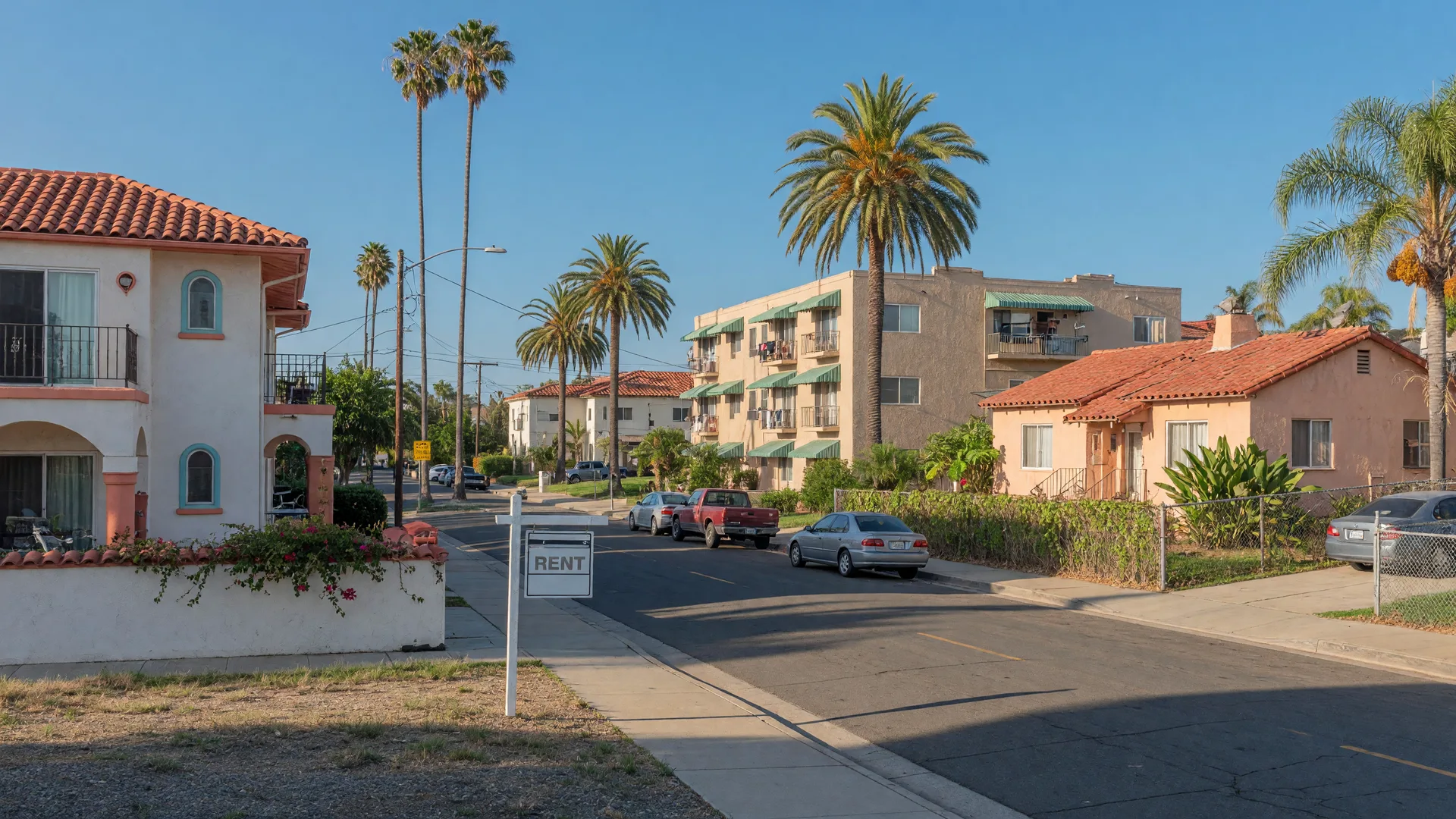
If you own rental property in San Diego, or if you rent your home here, there is an important change that just took effect on August 1 that affects how much rent can increase over the next twelve months. California's AB 1482 rent cap for San Diego County has dropped from 8.8% to 8.2%, and understanding what this means for your specific situation matters whether you are managing a single duplex or evaluating your next investment.
As an agent, investor, and someone who has navigated California's ever-shifting regulatory landscape for 18-plus years, I know that policy updates like this one can feel abstract until they show up on a rent notice or a pro forma. Let me walk you through exactly what changed, how the cap works, which properties are exempt, and what this means for San Diego landlords, tenants, and investors in practical terms.
What Is AB 1482 and How Does the Cap Work?
AB 1482, the Tenant Protection Act of 2019, applies across California and caps annual rent increases at 5% plus the regional Consumer Price Index (CPI), with a hard ceiling of 10% — whichever is lower. The formula uses the percentage change in the regional CPI published for April of the prior year to April of the current year. For increases effective on or after August 1 of any given year, that year's April CPI is used.
For San Diego County, the regional CPI for the San Diego-Carlsbad metropolitan area came in at 3.2% for the period ending April 2026. Add that to the 5% base, and the new maximum allowable annual rent increase is 8.2% through July 31, 2027. This is down from 8.8% in the previous cycle and reflects a cooling in inflation-driven costs across the region.
Landlords subject to AB 1482 may divide the allowable increase into no more than two increments during the same 12-month period, but the total cannot exceed 8.2% regardless of how it is split.
Which Properties Are Covered and Which Are Exempt?
AB 1482 applies broadly, but there are important exemptions that every San Diego property owner should understand:
- New construction. Properties with a certificate of occupancy issued within the last 15 years are exempt from the rent cap. For 2026, that means buildings completed after approximately 2011 are not subject to AB 1482. This rolling exemption was designed to encourage new housing production without burdening developers with rent restrictions immediately.
- Single-family homes and condos. These are exempt if they are not owned by a corporation, a real estate investment trust (REIT), or an LLC where a corporation is a manager. However, the owner must deliver a written notice to the tenant under Civil Code Section 1946.2 to claim the exemption. If that notice was not provided, the property is treated as covered regardless of ownership structure.
- Owner-occupied duplexes. If you live in one unit of your duplex, the other unit is exempt from AB 1482.
- Deed-restricted affordable housing. Properties already subject to affordability restrictions from a government agency are exempt.
- Dormitories, transient/hotel housing, and certain institutional settings.
- Properties under stricter local rent control. San Diego County does not have its own local rent control ordinance, so AB 1482 is the sole rent-cap protection for most rental properties here. That is different from cities like Los Angeles or San Francisco, where local ordinances set tighter limits.
The bottom line: if you own a single-family rental that is not held in a corporate entity, and you have given your tenants the required exemption notice, your property is not subject to the 8.2% cap. But if you missed that notice, the cap applies. This is one of those details where a small paperwork gap can create a big liability, and it is worth reviewing with your legal or tax advisor.
What the New Cap Means for San Diego Landlords
For landlords who own properties subject to AB 1482, the drop from 8.8% to 8.2% represents a modest but real reduction in maximum allowable rent growth. On a unit renting for $2,500 per month, the difference is roughly $15 per month, or $180 per year. On a portfolio of units, that adds up.
Here is the context that matters more than the percentage itself: San Diego's rental market is already softening. Vacancy rates have climbed to their highest level since 2009, and rents across the county are flat to slightly declining in many segments. In practical terms, the market may not support an 8.2% increase on many properties right now regardless of what the law allows. A landlord who pushes rents to the legal maximum in a softening market risks increased turnover, longer vacancy periods, and tenant friction that ultimately costs more than the increase would have generated.
As someone who owns investment property myself, I look at this through a dual lens. The legal cap tells you what is permissible. The market tells you what is prudent. The landlords who succeed in this environment are the ones who price their units at what the market will bear, maintain strong tenant relationships, and plan for the long term rather than squeezing every dollar of a short-term allowance. Our Investment Properties page covers how I think about portfolio strategy in a shifting market.
What This Means for San Diego Tenants
If you rent your home in San Diego, the 8.2% cap provides a measure of predictability. Your landlord cannot raise your rent by more than 8.2% in any 12-month period, provided your property is covered by AB 1482. That is still a significant increase on a $2,800 monthly rent — roughly $229 per month at the maximum — but it is a defined ceiling, not an open-ended number.
It is also important to know that AB 1482 provides just-cause eviction protections for tenants who have lived in a unit for 12 months or more. That means your landlord needs a valid reason defined by the law to end your tenancy, not simply a desire to raise rents or change tenants. These protections do not apply to exempt properties, so knowing whether your rental is covered matters for your rights as a tenant.
The current rental market is the most favorable for tenants that San Diego has seen in years. Vacancy is up, new units are coming online, and many landlords are offering concessions rather than raising rents. If you have been thinking about negotiating your lease terms or exploring a different neighborhood, this is an excellent time to have that conversation. Our Complete Renting Guide covers everything from lease terms to neighborhood selection.
What This Means for Real Estate Investors
For investors evaluating San Diego rental properties, AB 1482 is one factor in a larger underwriting picture. The 8.2% cap is manageable for most well-priced acquisitions, especially when combined with San Diego's long-term supply deficit and strong population growth. But it does mean that aggressive rent-growth assumptions need to be tested against both the legal ceiling and the market reality of softening demand.
Here is where I see the strategic implications:
- Turnover costs matter more. When rent growth is capped and the market is softening, keeping good tenants becomes a financial priority. A month of vacancy at $2,800 is roughly the same as the total annual rent increase you would receive under the 8.2% cap. The math favors stability over churn.
- New construction has an advantage. Properties built within the last 15 years are exempt from AB 1482, giving owners of newer buildings more flexibility on rent. That is one reason the current wave of new apartment construction — approximately 4,000 units scheduled for 2026 in San Diego — is so significant for the market. These units compete without the same regulatory constraints.
- ADUs offer a different path. Accessory dwelling units built recently are typically exempt from AB 1482 for 15 years from the certificate of occupancy date. Combined with recent state laws that eliminated owner-occupancy requirements and allow separate ADU sales, this creates an interesting opportunity for investors who can build well. I covered this in more detail in our ADU Boom article.
- Cap rate compression is real. With both market rents and allowable increases moderating, investors need to be realistic about cap rates and cash flow projections. The days of 10%-plus annual rent growth are behind us for now. But properties purchased at today's prices with realistic rent assumptions still pencil well over a five-to-ten-year hold period, especially with mortgage rates expected to trend downward through end of 2026.
If you are an investor trying to decide whether now is the right time to buy in San Diego, the answer depends on your timeline, your financing, and your tolerance for the current market dynamics. As someone who invests alongside my clients, I can tell you that the investors doing best right now are the ones who buy with a hold strategy, underwrite conservatively, and understand that AB 1482 is just one variable in a much larger equation. Our One-Stop Shop article goes deeper into how having a trusted advisor who also invests changes the conversation.
The Military Family and PCS Angle
As a military spouse, I know that rental housing is a constant consideration for active-duty families moving to San Diego. If you are PCSing here and planning to rent before you buy, the current environment is about as good as it gets: more units to choose from, rents that are not rising as fast, and the protection of AB 1482's just-cause eviction rules if you are renting a covered property.
One thing to be aware of: military families frequently rent in the window between receiving orders and buying a home, and those leases are often short-term. Understanding whether your rental is subject to AB 1482 matters less for the rent cap (short-term leases typically align with market rates anyway) and more for the just-cause protections that come with it. Our Military and Veterans page has a full breakdown of how to time a PCS move, compare VA loan costs with renting, and choose neighborhoods near every base in the region.
Looking Ahead: What to Watch Through 2027
The 8.2% cap is in effect through July 31, 2027, but the number will change again next year based on where CPI lands. If inflation continues to moderate, the cap could drop further. If inflation ticks back up, it could rise. The key is understanding that the formula is designed to follow economic conditions, not set them.
Several broader trends will shape how AB 1482 interacts with the San Diego market over the next 12 months:
- Mortgage rate movements. Fannie Mae's forecast calls for the 30-year fixed rate to decline toward approximately 5.9% by year-end 2026. A meaningful drop in rates could pull renters into the buying market, reducing rental demand and putting further pressure on allowable rent increases.
- The construction pipeline. With thousands of new apartment units still delivering across San Diego County, the supply-side pressure on rents will continue through at least mid-2027. That benefits tenants and creates a more balanced negotiating environment for everyone.
- State-level policy momentum. California continues to push housing production legislation. The 2026 "Year of the Housing Factory" initiative and ongoing transit-oriented development streamlining (SB 79) will keep adding supply at price points and locations that diversify the rental market.
- Local infrastructure investment. Measure A, the county infrastructure and housing measure passed earlier this year, is funding improvements that support property values over time. Better infrastructure makes neighborhoods more desirable, and more desirable neighborhoods support stronger rent and price fundamentals.
What Is Most Important to You?
Policy updates like AB 1482's new cap are important to understand, but they are rarely the deciding factor in a sound real estate decision. What matters more is your specific situation: the property you own or are considering, your timeline, your financial goals, and the personal circumstances that brought you to this decision in the first place.
After 18-plus years in San Diego real estate, I have learned that regulations change, but the fundamentals of good decision making stay the same. Know your numbers. Understand your rights and obligations. Work with people who have been through it before and can help you see around the corner.
Whether you are a landlord trying to set rents for the coming year, a tenant wondering what your rights are, an investor evaluating a deal, or a military family arriving in San Diego and deciding whether to rent or buy, I would love to hear your story. What is your biggest challenge right now? Where are you headed next? Let's talk it through.

Hanna Bederson
Real Estate Agent, Investor & Military Spouse · San Diego · DRE #02096870
Not sure how the new rent cap affects your situation?
Let's TalkIn service, Hanna