San Diego's Rental Market Is Shifting: What Falling Rents and Rising Vacancy Mean for You
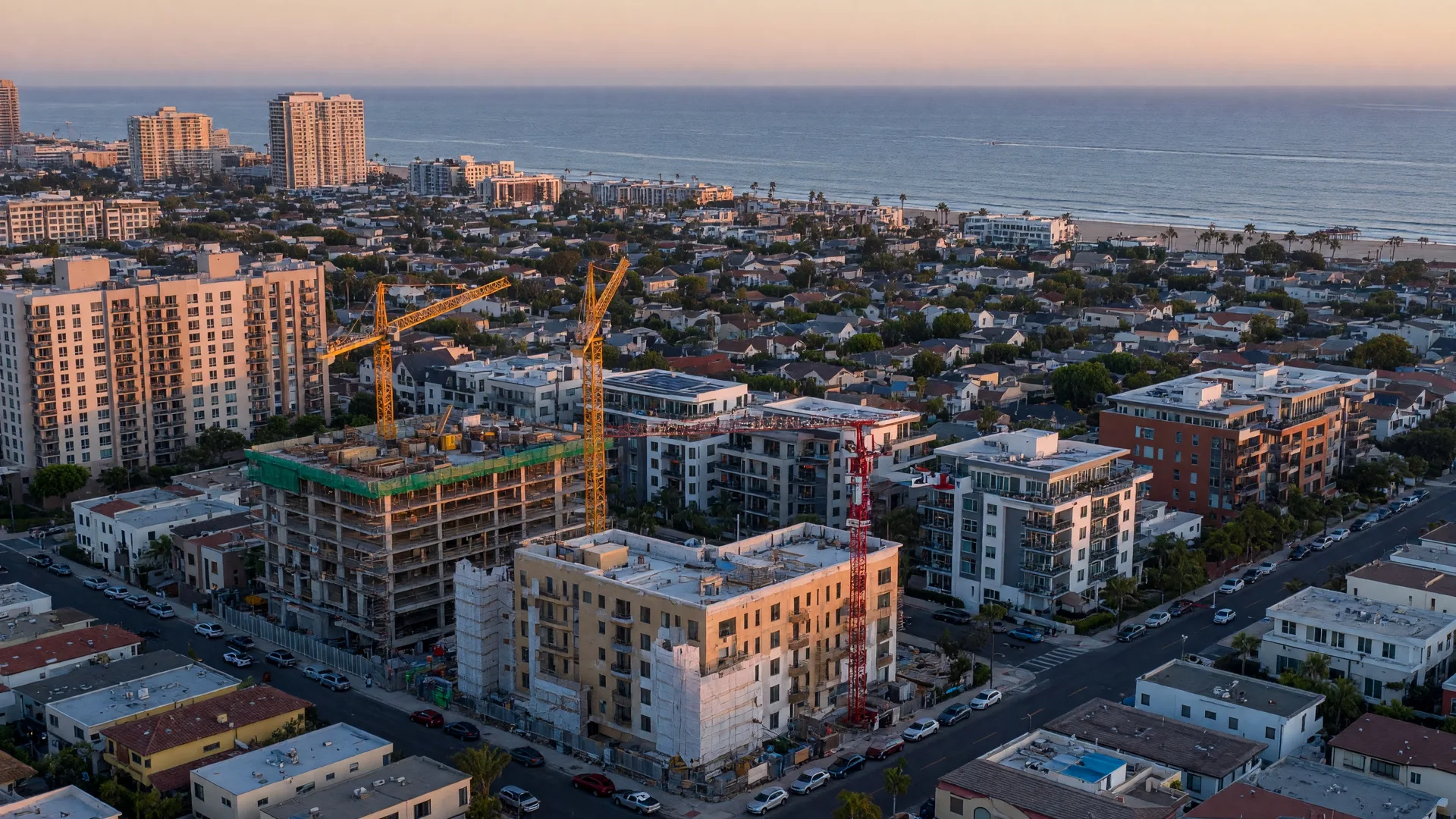
Something unusual is happening in San Diego's rental market. After years of relentless rent increases, rising costs, and fierce competition for apartments, the numbers are telling a different story in 2026. Vacancy rates have climbed to their highest level since 2009. Rents have flattened or declined across most of the county. And thousands of brand-new apartment units are still entering the market.
If you are a buyer wondering whether to rent or buy, a seller trying to price your property correctly, or an investor evaluating your next move, this shift matters. It is one of the most significant market dynamics in San Diego right now — and it creates opportunities for people who understand what is driving it and where it is headed. With 18+ years in this market, including my own experience as an investor, I want to walk you through exactly what the data says and what it means for your strategy.
The Numbers Behind the Shift
San Diego's multifamily vacancy rate has climbed to approximately 5.4% to 5.7% county-wide, according to data from Kidder Mathews and Northmarq. That is up roughly 50 basis points year-over-year and represents the highest vacancy level the county has seen since the aftermath of the 2008 financial crisis. Downtown San Diego is even more pronounced, with vacancy exceeding 10% in some Class A buildings.
What is driving it? Supply. San Diego delivered approximately 6,200 new multifamily units in 2025, followed by roughly 4,000 more scheduled for 2026. Both figures are well above the historical average. Major projects opening this year include Elowen in Serra Mesa with 302 apartments, Park Summit in Bankers Hill with 265 units, and Broadstone Mission Valley — part of the larger wave of transit-oriented development reshaping the county.
The result: average asking rents across the county sit between $2,417 and $2,960 per month depending on the data source, essentially flat to slightly negative year-over-year. San Diego experienced six consecutive months of rent declines through late 2025 — the first sustained rental price decreases since 2010. Some properties saw effective rents drop as much as 7.5% from peak to trough.
Meanwhile, San Diego has slipped to 12th nationally among the most expensive rental markets, down from its previous top-10 ranking. That may not sound like a dramatic fall, but in a city where affordability has been a defining challenge for years, any movement in the right direction matters.
What This Means for Renters
If you are currently renting in San Diego, this is the most favorable environment you have seen in years. Here is what the shift looks like in practice:
- More negotiating leverage. Landlords with vacant units are offering concessions — free rent periods, waived application fees, reduced deposits, and flexible lease terms. In a market with 5.7% vacancy, you have options. Use them.
- Better unit quality at the same price point. New construction hitting the market is competing directly with older buildings, which means you can often find a newer unit with modern finishes at a price comparable to what you would have paid for a dated apartment a year ago.
- Geographic flexibility. Average rents vary significantly by neighborhood. Studios average around $1,930 county-wide, while one-bedrooms range from approximately $1,895 in City Heights to over $2,600 in coastal neighborhoods. Two-bedrooms cluster around $2,945. If you have been priced out of a neighborhood you love, the current market may bring it back into range.
But here is the strategic question I would ask you: if rents are flat or declining and home prices are stabilizing, does it make more sense to keep renting — or to buy? That calculation has shifted meaningfully in the past 12 months, and it is exactly the kind of conversation where a clear-eyed analysis of your finances, timeline, and goals can reveal an opportunity you did not expect. Our Buying Guide walks through the full rent-versus-buy analysis.
What This Means for Buyers
The rental market shift directly affects the for-sale market in several ways:
- The rent-versus-buy math is changing. When rents are flat or declining, the financial incentive to buy becomes more about long-term equity building, tax benefits, and stability rather than "renting is throwing money away." For buyers who can afford the monthly payment at current mortgage rates (the 30-year fixed sits around 6.49%), the stability of a fixed payment versus an uncertain rental market is worth evaluating seriously.
- Investor demand may soften. Some investors who bought rental properties at peak prices with the expectation of continued rent growth are now seeing their projections fall short. That can create motivated sellers — and opportunities for buyers who are patient and prepared.
- New construction creates neighborhood options. The apartment boom is concentrated in transit-oriented neighborhoods like Mission Valley, North Park, and along the trolley corridors. For buyers who want to live near those areas, the new development also brings improved infrastructure, retail, and amenities that support long-term property values.
If you are weighing whether now is the right time to buy, the answer depends on your situation — not on a headline. The Summer 2026 Buying Guide covers everything from pre-approval to closing strategy in detail.
What This Means for Sellers
If you own a rental property or are considering selling a home that could function as an investment, the rental market data adds context to your pricing strategy. A property that would have rented for $3,200 a year ago may now command $2,900 — and that affects what an investor-buyer is willing to pay.
For sellers of owner-occupied homes, the rental shift is less direct but still relevant. Rising vacancy and flat rents can signal broader market normalization, which reinforces the importance of pricing accurately, presenting your home well, and marketing beyond the MLS. The sellers who succeed in today's market are the ones who treat preparation as non-negotiable.
My Summer Selling Guide covers the full preparation and pricing strategy. And if you are evaluating whether to sell a rental property versus continuing to hold it, that is a conversation where an investor's perspective makes a real difference.
What This Means for Investors
This is where the data gets most interesting — and most nuanced. As an investor myself, I look at these numbers through three different lenses:
Cap Rates: Still Modest, But the Landscape Is Changing
San Diego cap rates average 4.8% to 5.1% for multifamily properties, with a median around 4.7%. Properties offering cap rates above 5% are considered strong for cash flow. The top neighborhoods for cash-flow investors include:
- City Heights: 6.3% cap rates, average one-bedroom rents around $1,895
- Barrio Logan: 5.8% cap rates, growing cultural and commercial appeal
- National City: 5.2% cap rates, proximity to downtown and the bay
But cap rates are only part of the equation. With vacancy elevated and rent growth flat to negative, the underwriting needs to work on today's numbers — not on an assumption that rents will spike next year. The investors who get into trouble are the ones who project 3% annual rent growth into a market where rents are actually declining. Run the conservative case first. If the numbers still work, you have a deal.
The ADU Opportunity: A Different Playbook
New California legislation has fundamentally changed the ADU landscape in 2026. AB 976 permanently eliminated owner-occupancy requirements for ADUs permitted after January 1, meaning you can build an ADU and rent both the main house and the unit as investment properties. And AB 1033 now allows ADUs to be sold separately as condominiums — a strategy that has already produced standalone ADU sales in coastal areas in the $450,000 to $500,000 range.
A well-built two-bedroom ADU in San Diego rents for approximately $2,000 to $2,800 per month, representing an estimated 7% to 11% annual return on a typical $200,000 to $300,000 build cost. With a 15-year property tax exemption on new ADUs under SB 1164, the carrying costs are lower than many investors expect.
I wrote a detailed breakdown of the ADU opportunity in our ADU Boom article, but the short version: in a market where traditional rental returns are compressing, ADUs offer a path to better yields — provided you build correctly and evaluate the numbers honestly. My background in commercial contracting means I look at these projects not just as an agent running comps, but as someone who understands what it costs to build well and what happens when you do not.
The Long Game: Why San Diego Fundamentals Still Matter
Despite the current rental softness, San Diego's structural housing shortage remains real. The county added 119,200 new households over the past decade but built only 63,500 homes — a deficit of roughly 55,700 units. That long-term supply constraint supports property values even when the rental market takes a breather.
For investors with a five-to-ten-year horizon, the current environment may represent an entry point. Prices have moderated, competition has eased, and the rental market softness is largely driven by a temporary supply wave that will eventually be absorbed. The question is whether you can weather the near-term cash flow dynamics while the market works through the inventory. That is a question with a different answer for every investor, and it is one I am happy to work through with you.
The Military Family Perspective
As a military spouse, I have a particular perspective on the rental market. Military families frequently arrive in San Diego on short timelines, needing to decide quickly whether to rent or buy. The current rental shift creates a real advantage for arriving service members and their families: more options, better pricing, and time to make a thoughtful decision rather than a desperate one.
If you are PCSing to San Diego this summer, the combination of elevated rental vacancy and growing for-sale inventory means you can rent in a neighborhood you are considering, get to know the community, and buy when you are ready — without the pressure of a market that forces you to act in 48 hours. Our Military & Veterans page covers VA loan strategy, base-proximity neighborhoods, and how to time your move effectively.
Looking Ahead: What to Watch
Several factors will shape where the San Diego rental market goes from here:
- The construction pipeline. Approximately 4,000 new units are still scheduled for delivery in 2026, with more in the 2027 pipeline. Until that supply is absorbed, vacancy will remain elevated and rent growth will stay muted.
- Mortgage rates. Fannie Mae forecasts rates falling to approximately 5.9% by year-end 2026. If that happens, some renters will transition to buying, reducing rental demand and potentially accelerating the rent-versus-buy shift.
- The Fed meeting on July 28-29. The FOMC's language about future rate cuts will influence mortgage rate expectations through the fall. A signal that cuts are coming could unlock additional buyer demand.
- ADU and modular housing production. San Diego has approximately 2,000 modular factory-built units in various stages of development as part of California's 2026 "Year of the Housing Factory" initiative. Combined with continued ADU permitting, these units will add supply at price points the market desperately needs.
What Is Most Important to You?
Market data is useful, but it is not the whole story. Whether you are a renter deciding whether to buy, a seller pricing your home, an investor evaluating the numbers, or a military family trying to time a move — the right strategy depends on your specific situation, your goals, and your timeline.
After 18+ years in San Diego real estate — as an agent, an investor, and a military spouse — I have learned that the best decisions come from honest conversations, not market headlines. The rental market shift creates real opportunity, but only for people who understand what the data actually means for their circumstances.
What is your biggest challenge right now? Where are you headed next? Let's figure it out together — no pressure, no assumptions, just a clear strategy built around what matters to you.

Hanna Bederson
Real Estate Agent, Investor & Military Spouse · San Diego · DRE #02096870
What does the current market mean for your situation?
Let's Talk StrategyIn service, Hanna