San Diego's Mid-City Plan Could Add 30,000 Homes: What It Means for Kensington, Normal Heights, and City Heights
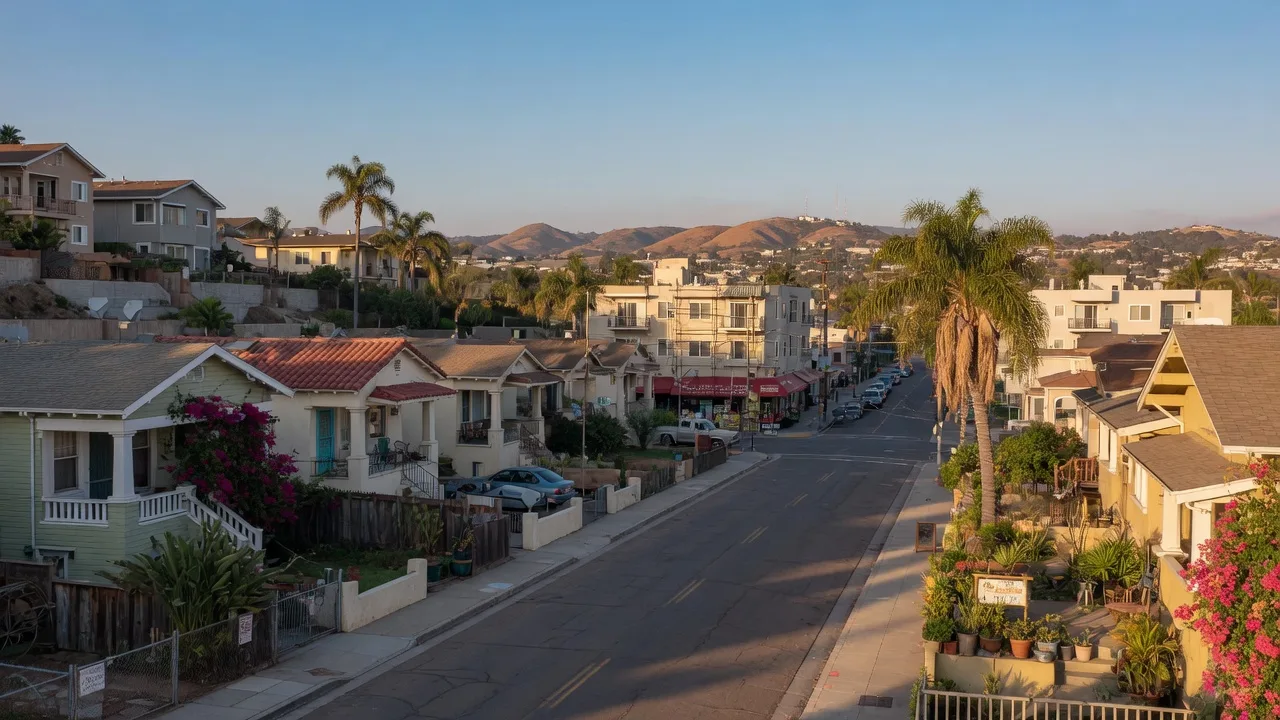
On August 10, 2026, the city released the first draft of its Mid-City Communities Plan Update, the first comprehensive update to this part of San Diego in roughly 30 years, and it would create the zoning capacity for about 30,000 new homes over the next three decades. If you live in Kensington, Normal Heights, City Heights, or the College area, or if you have ever thought about buying or investing there, this plan is the single biggest thing shaping the future of central San Diego real estate, and you should understand it now.
After 18+ years as an agent, investor, and military spouse across San Diego County, I have learned that the best opportunities come to people who understand a neighborhood before the rest of the market does. Plans like this do not change values overnight, but they change the trajectory, and trajectory is everything. Here is what is actually in the draft, what it means for your home or your next move, and how to make your voice heard before it is final.
What Is the Mid-City Communities Plan Update?
This is a community plan, the city's long-range land-use blueprint for four planning communities: City Heights, the Eastern Area (the College area), Kensington-Talmadge, and Normal Heights. The last real update was written in the mid-1990s, before the trolley, the craft-beer era, and the web changed how we shop for housing. The city spent two years listening first: more than 3,000 residents, about 100 community events, and over 9,300 comments went into the draft.
The headline number is housing. The draft creates zoning capacity for roughly 30,000 new homes over the next three decades, which roughly doubles the growth the existing plan projected, and it expects the area to add around 89,000 new residents by 2056. That does not mean 30,000 homes will be built next year. It means the city has written rules that make that number possible if the market demands it. In a county that still runs at roughly 2.4 months of housing supply, that conceivable supply matters.
Where Would New Homes Go?
The logic is clear. Most of the growth is concentrated along the boulevards built for it: El Cajon Boulevard, Fairmount Avenue, Federal Boulevard, and University Avenue. Along those corridors, the plan allows mid-rise, mixed-use buildings with homes above ground-floor retail, and up to about 18 stories on parts of El Cajon Boulevard. Eight stories are already permitted on Adams Avenue in Normal Heights, and the plan expands that toolbox.
The harder part for some neighbors is the rest: the draft significantly redefines single-family zoning across much of Normal Heights, Kensington, and Talmadge, allowing larger building footprints for ADUs and second units with less red tape. It also plans new parks throughout the area, including mini-parks, trailhead parks, and pocket parks.
What This Means for Homeowners in Kensington, Normal Heights, and Beyond
Do not treat this draft as a threat to your character block. Single-family homes still exist in the plan, and much of the new density is guided toward corridors that already carry apartments, offices, and retail. The bigger footprints, however, add option value to property you already own: a zoning change that allows an ADU or a second unit can change what a buyer will pay and what a builder will offer.
Prices in the central neighborhoods have already told that story. Kensington's median sale price runs roughly $1.6 million to $1.8 million for historic single-family homes, Normal Heights hovers around $900,000 to $940,000, North Park sits in the low $1.1 million range for detached homes, and City Heights, the most affordable of the four, around $650,000 to $700,000. Each becomes more attractive when the long-term supply story reads "planned, walkable, and only going to get more connected."
As a military spouse, I also know this: a stronger mid-city housing stock means more options near Naval Base San Diego and more stability for families who PCS every few years.
What Investors Should Watch
This is where my commercial contracting background comes in. When a community plan like this advances, value does not appear instantly. It shows up first in entitlements, then in land economics, and eventually when a property zoned for four units is worth more than the same property zoned for one.
For investors, the Mid-City plan is a study in patient capital. Corner lots near the El Cajon Boulevard corridor, older rentals on the inland side, and smaller multi-unit buildings that could benefit from an upzone all deserve a hard look, but they deserve even harder arithmetic. Financing costs more than it has in years, with 30-year fixed rates near 6.7% in early September, so any analysis needs to be conservative about cash flow and honest about timing. If you want to run the numbers, my Investment Properties page explains exactly how I structure that analysis.
And one reminder for sellers: like the plan, the fall market rewards preparation. My Selling Guide covers pricing, staging, and negotiation, and the pre-sale repairs that actually pay off in a market where buyers are more selective.
The Honest Debate: Not Everyone Wants the Same Neighborhood
No story about a community plan is honest without the resistance. The objections have been real and organized. Community planning group leaders and neighborhood activists, quoted in the Union-Tribune, argue the process has sometimes felt "undemocratic" by bypassing community planning groups, and they worry that the plan's near-total upzoning "wipes out" much of the existing single-family zoning in some areas. The Planning Commission's March workshop in particular drew criticism that community input was heard but not always heeded.
Both sides have a point, and honoring both is a matter of detail. That is why the timeline matters: the city is taking public comment through the rest of 2026, will release a second draft later this year, and hopes to finalize the plan in spring 2027. If you live there, attend a meeting, read the draft, and tell the city what you want the balance to be. The change is coming either way, and the people who shape it are the people who show up to the table.
Where Are You Headed Next?
Real estate does not reward reaction, it rewards pattern. The Mid-City draft is a pattern most people will not notice for years, and the buyers, sellers, and investors who understand it today will be positioned well when it plays out.
Whether you are a family in a Normal Heights bungalow sizing up an ADU, a first-time buyer eyeing the City Heights corridor, or an investor looking for the next honest entry point, I would love to help you think it through. What is important to you? Where are you headed next? That is where I start every conversation, because the right decision depends on your situation, not on what the market is doing for your neighbor.
For my full take on how mid-city and the market fit together, the North Park spotlight and the Riverwalk transformation in Mission Valley are good next reads. And when you are ready to apply it, my Buying Guide walks through pre-approval and negotiation in today's rate environment. I would be honored to serve you with the same clear data and honest guidance I bring to every client.

Hanna Bederson
Real Estate Agent, Investor & Military Spouse · San Diego · DRE #02096870
Wondering how the Mid-City plan could affect your home or next purchase?
Talk to HannaIn service, Hanna