
Newsom Signed a New Housing Package: What the California Laws Mean for San Diego
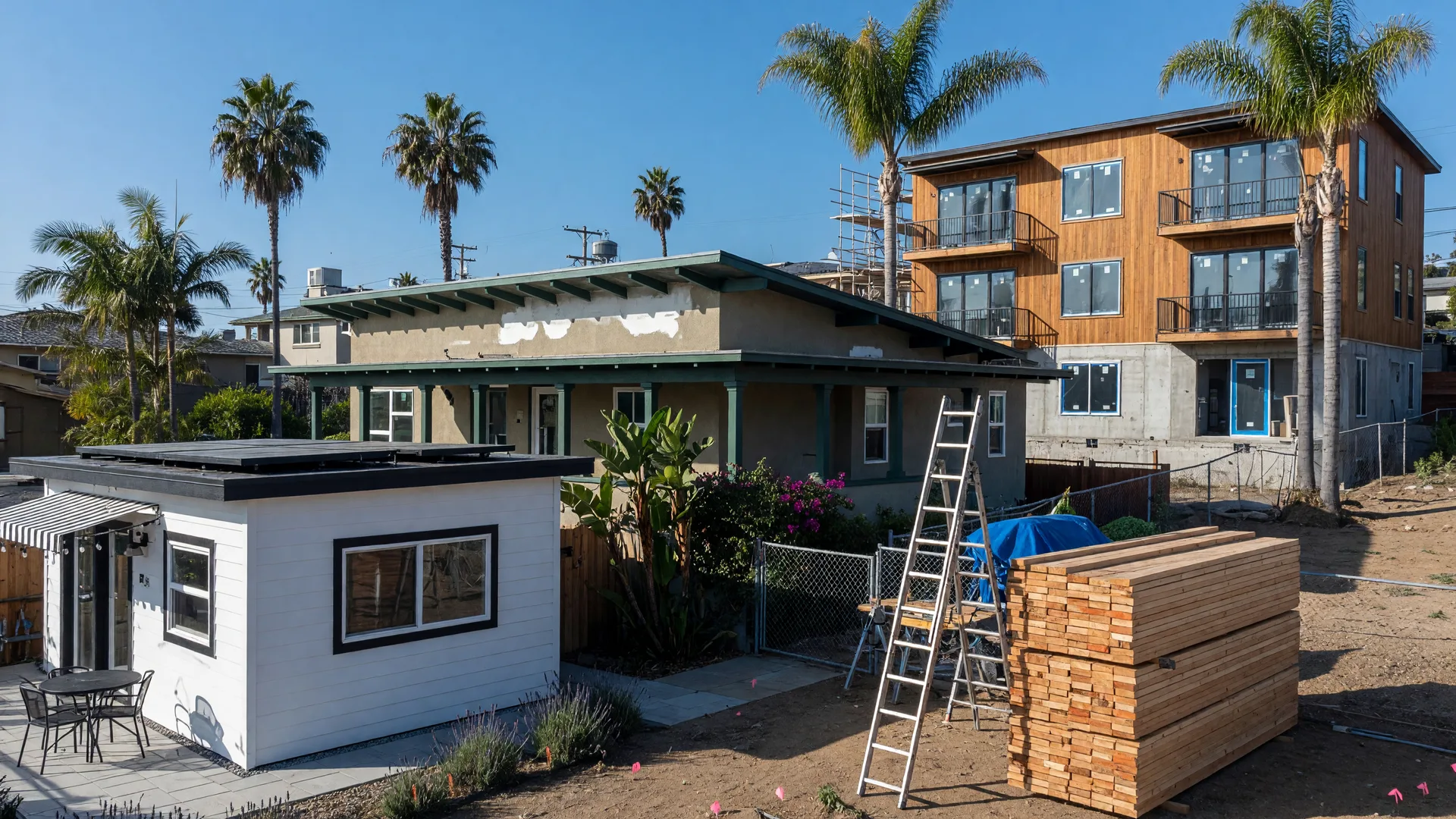
California Governor Gavin Newsom signed a new package of housing bills on September 29 and 30, most of them taking effect January 1, 2027. The changes touch three things San Diego cares about most: accessory dwelling units, townhomes and starter homes, and the Midway Rising redevelopment at the Sports Arena site. Here is what each law does, what it means for today's market, and how I am advising buyers, sellers, and investors.
With 18+ years as a San Diego agent, investor, and military spouse, I have watched housing policy move markets in ways that rarely show up in a headline. The questions my clients bring me stay the same: What is your biggest challenge? Where are you headed next? Let us start with the bill that touches the most homeowners directly.
SB 1117 Removes the ADU Fee Cliff
The most practical win is SB 1117, which eliminates what builders call the ADU fee cliff. Right now, an accessory dwelling unit over 750 square feet gets hit with impact fees on the full square footage, which pushes many families to build small or not at all. Under the new law, impact fees on an ADU over 750 square feet are charged only on the square footage above that threshold, and the relief applies to the first two ADUs on a lot. Smaller ADUs up to 750 square feet and junior ADUs up to 500 square feet stay fully fee-exempt. Sponsors estimate homeowners save thousands of dollars, and a family-sized two-bedroom ADU can mean renting it out, housing aging parents, or leaving a backyard empty.
This is where my commercial contracting background gets excited. Fee savings are one thing, but the real win is predictability. I have priced ADU projects for clients in Clairemont, El Cajon, and Oceanside, and the biggest surprise is almost always the fee stack, not the lumber. With the cliff gone, more of those projects pencil out. I wrote about the San Diego ADU boom and the cautionary tale of building and financing them safely, and this law removes a real barrier at exactly the right time.
Townhomes and the Missing Middle
Two bills aim at what planners call the missing middle: the attached, for-sale homes that sit between a single-family house and an apartment building. AB 1751, the Missing Middle Townhome Ownership Act, creates a ministerial, by-right approval path for townhome projects up to 150 units on qualifying parcels, which means no discretionary hearings and no CEQA lawsuit to survive. SB 1116 strengthens the Starter Home Revitalization Act, removing the old 5-acre site cap and limiting local setback and story-cap rules that shrink the yield on qualifying projects of about 10 homes.
The honest caveat: the earlier starter-home program got off to a slow start, with only about 300 participants statewide in its first year and none in San Diego County. So I would not expect a flood of new townhomes overnight. But in a county where the median attached home price sits around $670,000 while detached homes average roughly $1,080,000, any pathway that adds for-sale attached housing is good news for first-time buyers. I walk through the full first-time buyer playbook on my Buying Guide.
CEQA Clarity for Midway Rising
The most San Diego-specific piece is SB 344, which limits CEQA litigation aimed specifically at the $3.9 billion Midway Rising redevelopment of the Sports Arena site, a project planned for roughly 4,000 homes on about 49 acres with at least 2,000 affordable units. Companion bill SB 958 limits how added height is treated for qualifying infill projects. The state also added downtown hub standards: a 150-foot height baseline, at least a quarter of the hub allowed above 450 feet, and minimum densities around 200 units per acre.
Why does this matter even if you never buy at Midway? Large projects reshape whole neighborhoods: new parks, infrastructure, retail, and housing supply in Mission Valley that takes pressure off the resale market. I detailed the full plan in my Midway Rising article, and the city's Land Use and Housing Committee was set to review the development agreement the same week this package became news.
What This Means for the Market Right Now
As of the first week of October, San Diego County's median sales price sat at $910,000, up 1.7% year over year, with inventory at about three months of supply, the classic definition of a balanced market. Detached homes are tighter at roughly 2.4 months, while attached homes lean the other way. At the same time, the 30-year fixed mortgage averaged 7.40% the week of October 8, up from 7.28% just a week earlier, and September pending sales fell roughly 14% to 16% year over year. I broke down that data in my pending home sales article.
These new laws do not change your monthly payment, and most take effect January 1. But they do change the medium-term supply picture, and in a market this tight, supply is the number that decides whether San Diego stays a seller's market or drifts toward balance. The Union-Tribune noted that much of this package targets the hardest-to-build parts of the state, and San Diego is already relatively easier to build in, so the local effect will be more modest than the headlines suggest. The clearest local wins are ADU fee relief for homeowners and CEQA clarity for Midway Rising.
What Buyers, Sellers, and Investors Should Watch
For buyers, watch the attached market. More townhome approvals and a healthy condo pipeline give you negotiating room, and the attached median near $670,000 remains the realistic entry point for first-time buyers. Get pre-approved so you know what a 7.4% rate means for your payment, and ask sellers for concessions in this cooling market. For military families, VA loans still price below that headline rate with zero down, which I cover on my Military and Veterans page.
For sellers, the theme is fundamentals. Homes priced honestly and marketed well are still selling in five to six weeks, and buyers have more leverage than a year ago. A move-in-ready home wins the comparison, and my guide to pre-sale repairs that actually pay off plus the full playbook on my Selling Guide cover what is worth doing before you list.
For investors, watch the ADU math. With the fee cliff gone and family-sized ADUs more feasible, the rental yield on a well-located San Diego lot improves, and that is exactly the kind of value-add analysis I run for my own portfolio. The Investment Properties page explains how I evaluate deals, and if you want to know whether an ADU makes sense on your property, I would love to run the numbers with you.
Where Are You Headed Next?
Here is my read. A new housing package that chips away at cost and delay, layered on a market that is cooling but far from falling. That combination rewards people who plan. Whether you are thinking about an ADU, a townhome, a first purchase, or a sale, the right first step is a conversation about your situation, not a headline.
What is your biggest challenge? Call or text me at (619) 630-9618, or visit the contact page, and let us build a plan for this specific market.

Hanna Bederson
Real Estate Agent, Investor & Military Spouse · San Diego · DRE #02096870
Wondering how the new housing laws and this market affect your specific move?
Let's Talk StrategyIn service, Hanna